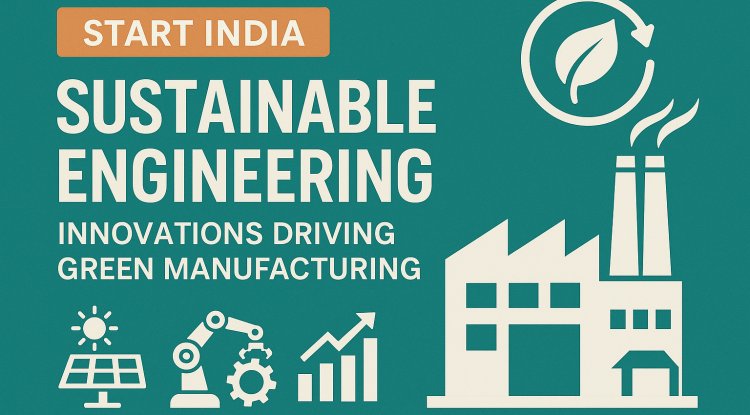
Sustainable Engineering: Innovations Driving Green Manufacturing
???? Introduction: A New Era of Green Manufacturing
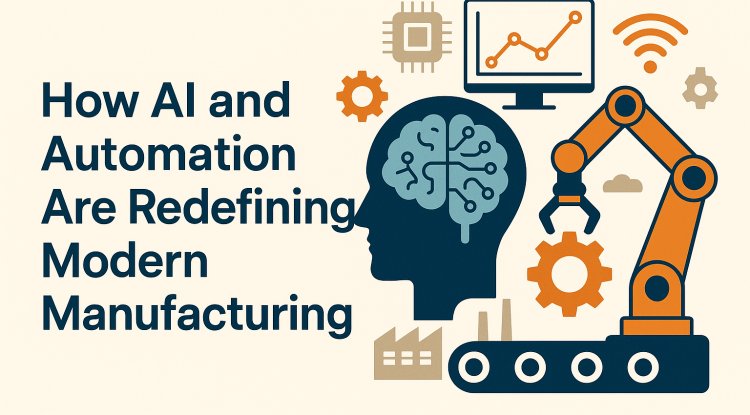
In the age of rapid industrial growth, sustainability has moved from a buzzword to a business imperative. Across India and the globe, manufacturers are rethinking how they design, produce, and distribute goods—and at the heart of this transformation lies artificial intelligence (AI) and automation.
These technologies aren’t just enhancing productivity; they’re enabling the shift toward sustainable engineering—a practice that blends innovation with environmental responsibility. Green manufacturing isn’t just about cutting emissions; it's about using smarter tools to build smarter processes that benefit both business and planet.
???? Defining the Key Concepts
-
Green manufacturing involves processes that reduce waste and pollution while maintaining economic viability.
Together, these concepts are reshaping the industrial landscape.
⚙️ The Current Landscape: Smart, Clean, and Competitive
Industries across sectors—from automotive to pharmaceuticals—are investing in smart factories and automated systems. India, under the Make in India initiative, is seeing a surge in smart industrial parks, IoT-enabled machinery, and green certification programs.
Key Trends in Green Manufacturing:
-
Integration of AI-powered energy management systems
-
Use of robotic process automation (RPA) for resource-efficient operations
-
Circular manufacturing using recycled materials and closed-loop systems
???? How AI & Automation Are Revolutionizing Manufacturing
1. Production Efficiency
AI optimizes workflows by predicting bottlenecks and adjusting operations in real time. For example, Siemens uses AI algorithms to fine-tune machine performance, reducing energy use and production time.
2. Cost Reduction
Automated systems reduce reliance on manual labor, lower error rates, and minimize resource wastage. Tata Steel, for instance, uses automation to monitor furnace conditions, leading to significant energy savings.
3. Quality Control
With computer vision and machine learning, manufacturers can detect defects with extreme precision. AI models are trained to spot inconsistencies that human eyes might miss, improving both consistency and safety.
4. Supply Chain Optimization
AI enables predictive analytics for demand forecasting and logistics planning. Companies like Mahindra & Mahindra use AI to streamline supply chains, reducing fuel usage and inventory overhead.
???? Solutions and Strategies for Integration
- Training Programs: Collaborate with educational institutions to upskill employees in digital tools and data analysis.
-
Collaborative Innovation: Work with startups and tech providers to co-develop customized solutions.
???? The Future Outlook: Smart, Sustainable, Scalable
As AI algorithms become more intelligent and automation more accessible, the potential for green manufacturing will only grow. By 2030, experts predict that nearly 50% of manufacturing tasks will be automated, with sustainability embedded in core design processes.
India is uniquely positioned to lead this green transformation—with its growing tech talent, policy support, and increasing environmental awareness.
✅ Key Takeaways
-
AI and automation are critical drivers of sustainable engineering and green manufacturing.
-
These technologies boost efficiency, cut costs, and reduce environmental impact.
-
Real-world case studies from India demonstrate that smart manufacturing is no longer optional—it’s essential.
-
Challenges exist, but with the right strategies, partnerships, and investments, businesses can thrive sustainably.
-
The future is green, intelligent, and industry-driven.
???? Explore Further
If you're an engineer, manufacturer, or industry leader looking to innovate sustainably, now is the time to act. Stay ahead by embracing the fusion of technology and sustainability in every step of your operations.
Follow Start India Network for more insights on industrial transformation, engineering innovation, and B2B opportunities.
What's Your Reaction?