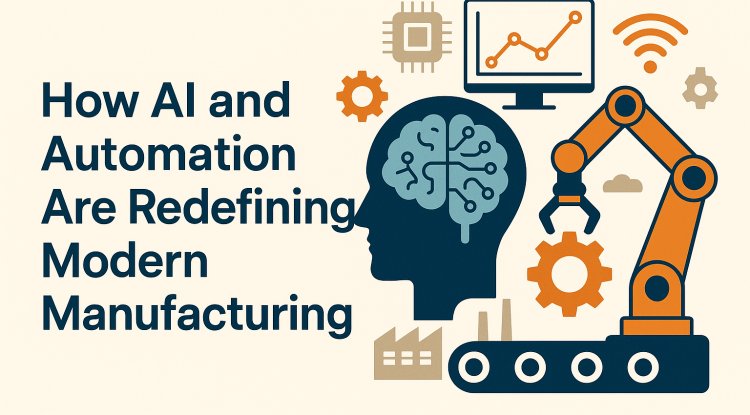
AI and Automation Are Redefining Modern Manufacturing
Introduction: A New Era for Manufacturing
The manufacturing industry, once defined by assembly lines and manual labor, is undergoing a revolutionary transformation. Thanks to rapid advancements in Artificial Intelligence (AI) and automation, factories are becoming smarter, faster, and more efficient than ever before. These technologies aren’t just enhancing productivity—they’re reshaping the very foundation of how goods are designed, produced, and delivered.
In a world driven by speed and precision, AI and automation are no longer futuristic buzzwords—they're essential tools for survival and growth in the global manufacturing landscape.
Understanding the Basics: What Are AI and Automation?
Before diving deeper, it’s worth understanding the terms:
-
Artificial Intelligence (AI) refers to computer systems that simulate human intelligence—learning from data, recognizing patterns, making decisions, and even predicting outcomes.
Together, AI and automation are enabling a shift from reactive to predictive, manual to intelligent, and isolated to interconnected manufacturing systems.
The Current Landscape: From Smart Machines to Smart Decisions
Modern factories are no longer just filled with machines—they're powered by data. Manufacturers are integrating AI with sensors, robotics, and software to monitor production lines in real time, detect defects before they occur, and optimize entire workflows without human oversight.
Key Trends Driving the Shift:
-
Industrial IoT (IIoT): Connecting machines to the internet to gather and analyze data continuously.
-
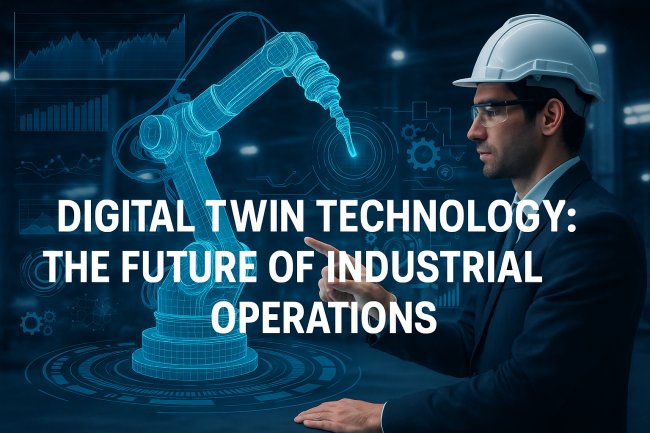
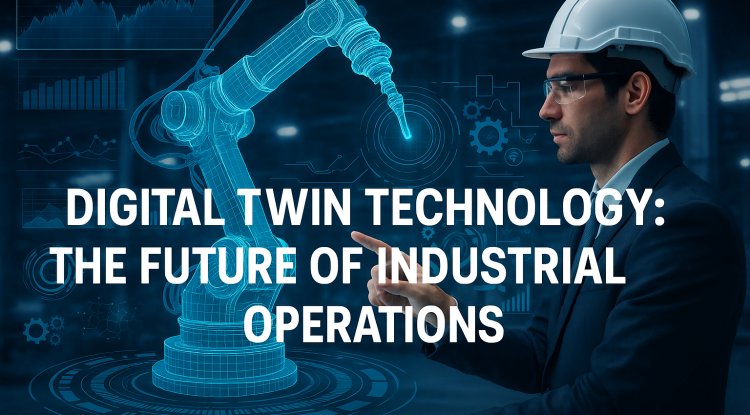
Digital Twins: Virtual replicas of physical systems that allow manufacturers to simulate changes and anticipate problems.
-
Machine Learning (ML): Algorithms that improve over time by learning from production data.
-
Collaborative Robots (Cobots): Robots that work alongside humans, enhancing safety and productivity.
The Transformative Impact of AI and Automation
AI and automation are transforming nearly every facet of the manufacturing process. Here's how:
1. Production Efficiency
AI-driven automation speeds up production by identifying bottlenecks and reallocating resources in real time. For example, Siemens uses AI in its factories to automate complex assembly processes, resulting in reduced cycle times and increased output.
2. Cost Reduction
Automating repetitive tasks minimizes labor costs and operational downtime. Tesla's Gigafactories, for instance, rely heavily on AI-powered robots to streamline electric vehicle production, reducing costs per unit while scaling operations.
3. Quality Control
AI systems can detect even microscopic defects in real time. Companies like GE use computer vision to inspect components on the production line, ensuring that only top-quality products make it to market.
4. Predictive Maintenance
Caterpillar, for example, uses AI to analyze sensor data and schedule timely maintenance for its heavy machinery.
5. Supply Chain Optimization
AI helps forecast demand, manage inventory, and identify supply chain risks. Amazon’s fulfillment centers use AI to predict order patterns and optimize inventory placement, ensuring faster deliveries and reduced storage costs.
Challenges on the Road to Smart Manufacturing
While the benefits are clear, adopting AI and automation comes with its own set of hurdles.
1. Workforce Adaptation
As machines take over repetitive tasks, there's a growing need for workers to upskill and shift to more strategic roles. The transition can be challenging for both employees and employers, requiring investment in training and change management.
2. Cybersecurity Risks
More connected systems mean greater vulnerability. Protecting sensitive data and preventing cyber-attacks becomes crucial. Manufacturers must invest in robust cybersecurity infrastructure and protocols.
3. High Initial Investment
Installing AI systems, robots, and smart software isn’t cheap. Small and mid-sized enterprises (SMEs) often face financial barriers. However, with scalable cloud-based solutions and government-backed digitalization programs, the playing field is gradually leveling.
Overcoming the Barriers
To navigate these challenges, manufacturers should:
-
Start small: Begin with pilot projects to test the impact of AI on specific areas.
-
Invest in people: Train existing staff in digital tools and foster a culture of innovation.
-
Choose scalable tech: Cloud-based AI solutions can be more cost-effective and adaptable.
-
Partner smartly: Collaborate with technology providers or B2B platforms like Start India Network to access expertise and resources.
Looking Ahead: The Future of AI in Manufacturing
The road ahead is promising. With continued innovation in generative AI, edge computing, and autonomous systems, the future factory could run with minimal human input, dynamically adapting to changes in demand, materials, and logistics in real time.
According to a McKinsey report, AI could deliver up to $3.8 trillion annually in manufacturing productivity gains by 2035. That’s not just evolution—it’s a revolution.
Final Thoughts
AI and automation are not just redefining how things are made—they’re redefining what’s possible in manufacturing. From predictive maintenance and precision quality checks to agile supply chains and smart robotics, the industry is entering a golden age of innovation.
The takeaway? Companies that embrace this shift today are setting the foundation for tomorrow’s competitive edge. And as India’s industrial ecosystem continues to grow, now is the time to explore, experiment, and evolve.
What's Your Reaction?